

Forum Replies Created
-
AuthorReplies
-
I think the trick for most cinematographers is actually to NOT visualize a script while reading it for the first time!
I don’t think Kubrick had a negative attitude towards digital effects.
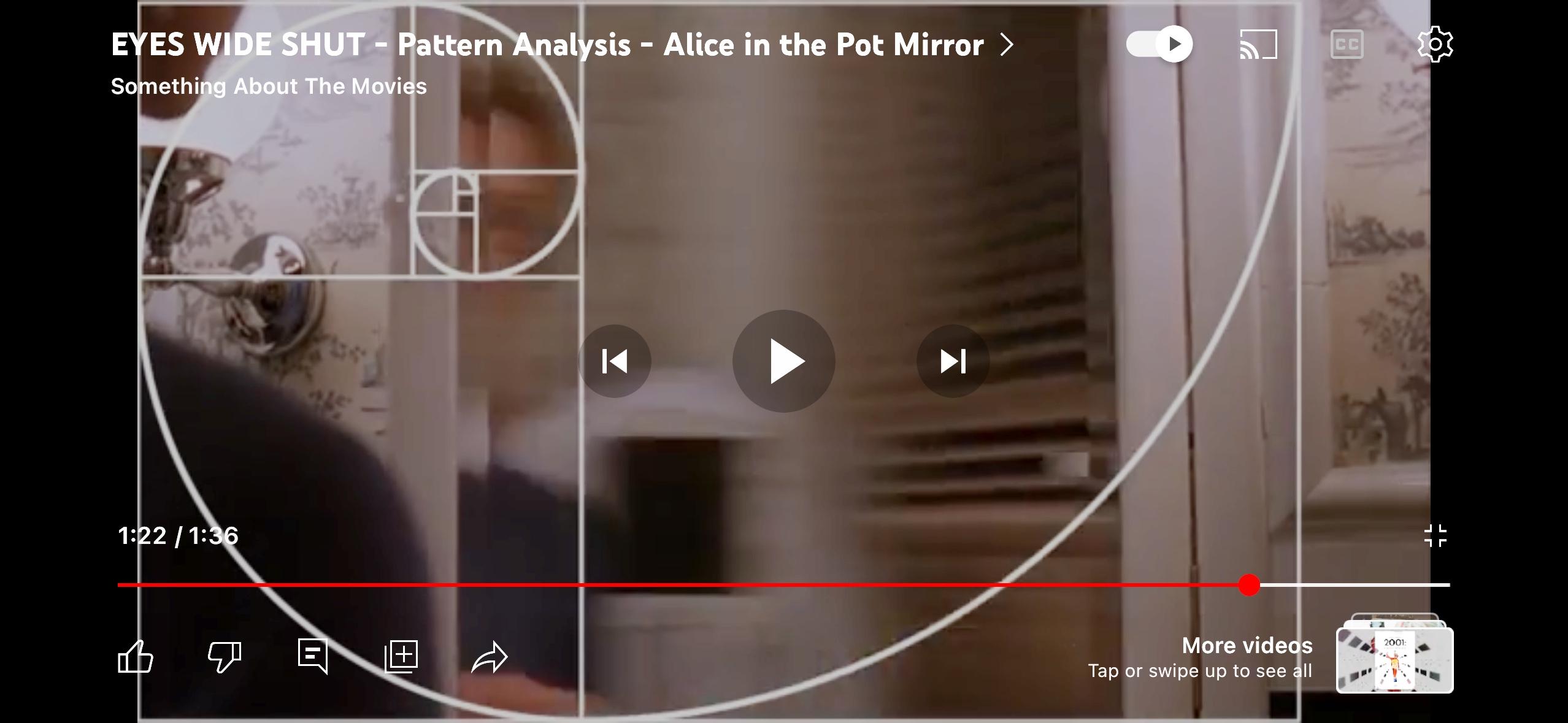
It’s just that he had the time and budget to solve some technical problems on set rather than fix them in post. Building a set with a camera port like that just requires planning, something that Kubrick had time to do. Even if this shot was conceived during a rehearsal, he had time to have his art department change the set and then come back to it in a day or two to shoot the mirror shot. Truth is that a camera port like that might have been conceived in a morning rehearsal and built during a lunch break or even faster. If the production designer allows it, I’ve had my key grip come out with a power saw and cut a hole in a set wall within a few minutes then asked the on-set dresser to hide the hole with something.
Articles at the time mentioned 100T film being used for day exteriors on “No Country for Old Men”.
You can get a denser-than-normal negative by either rating the film ISO slower or just increasing the exposure after your meter reading, it’s the same thing. Or by extended development.
There’s a camera port cut into the set wall:
Roger has used strong colored lighting on occasion, there was the blue-lit face of Daniel Craig in the car in Shanghai (Skyfall), the orange light of Las Vegas and the magenta light when K sees the large hologram advertisement of Joi (Blade Runner 2049), etc.
It comes down to story (the color is emotionally or symbolically motivated, or plot-driven), whether the colored light is naturally motivated (it would be odd if someone was right next to a red neon sign and not have red light on them), and taste.
Sometimes an image is very strong visually because the filmmaker wants to mark that moment in the viewer’s mind.
In theory there wouldn’t be much difference shooting under completely red lighting and under white lighting with a red filter. However sometimes darkrooms have faint tiny lights on machines that would give you a small non-red spot of light.
The main issue to consider is loss of sharpness when everything is red due to the fact that only 25% of the Bayer filter is red — plus your camera may be recording in something other than 4:4:4.
Softness under red light is an issue even when shooting film.
I haven’t tested this myself, but some have suggested shooting under white light or some color light that still allows information to be recorded in the other two channels, maybe magenta or orange light (or filter) and then correcting the image to red in post color-correction. In theory, this may help you retain some sharpness. Worth testing.
There might have been a rough sketch of the layout of vehicles in prep or a few days before but on the day, the director and I just worked with Transpo and Props to create a frame.
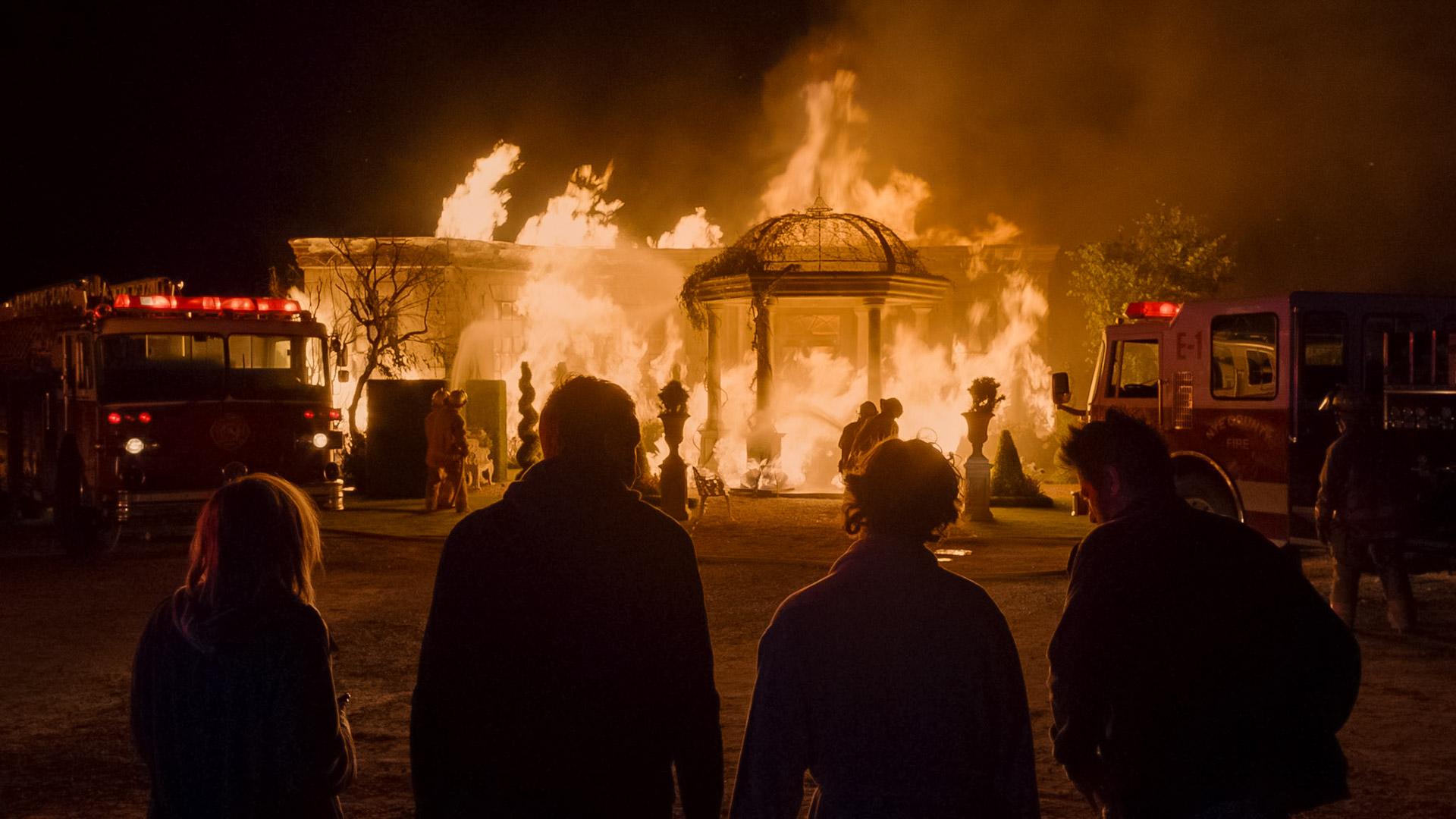
This was shot closer to f/11. But keep in mind, this was not an explosion but a continuous fire so I didn’t have to light the surrounding area to f/11, there was no before and after moment.
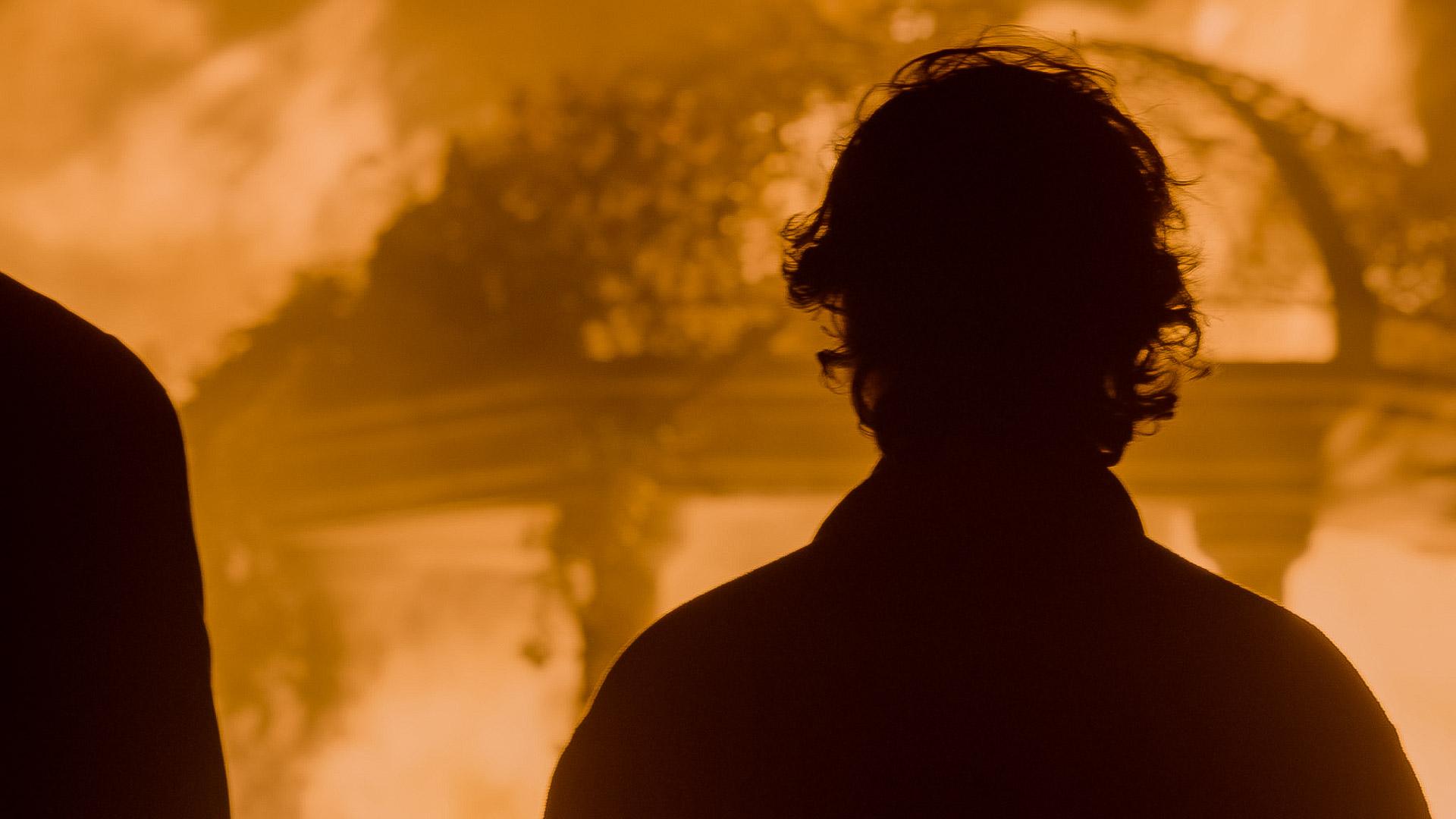
It’s from a TV series I did called “Get Shorty”, Season 1.
The truth is that it is hard to underexpose a fire — look at the burning of Atlanta scene in “Gone with the Wind” shot on 5-to-10 ASA 3-strip Technicolor.
So you try and light for a higher f-stop at night to hold color in a big fire, but everyone runs into practical limits. The big Cyberdyne night exterior on “Terminator 2” was lit to f/5.6 for 500 ASA film just to have a chance of holding detail in big explosion.
I had a large fire scene shot on the Alexa and could only light the night exterior to f/2.8 but once the fire got really big, I was at f/8-11 when pointing at the flames in the wide shot and when I zoomed in close, I was at f/11-16! Luckily it wasn’t an explosion; if it were, I would have tried to light the location to a deeper stop, like f/5.6.
Yes, using a camera with good overexposure latitude helps.
Raw is uncompressed plus color temperature and ISO are not baked in. And you can record Open Gate. Practically speaking, if you shoot carefully, the difference is subtle… the ProRes recording has a standard amount of sharpening built into it, so you may find that the footage feels slightly more “electronic” than a raw conversion with no sharpening.
You’re mainly trying to be consistent within the coverage of a scene. Individuals in a space may be in different lighting ratios but when you go from a wide shot to closer shots, you try and make it feel similar in contrast. If you’re cutting to a reverse angle not seen in the master wide shot, you are more free to create a different effect.
You can use a light meter of course if you are concerned. Often you light a master –let’s say to f/2.8 — and when you go into coverage, you might adjust the light on the actor but not touch the background light so if you light the actor to the same level as the master, then the background will look the same as before. The ratio you often set by eye, especially if you are going for that “barely visible” level of fill. But you can use a light meter or tools like false colors, waveforms, etc. if you’re not sure.
If shooting digital with a DIT on the crew, you can also save a frame of the master shot and compare the new set-up to see if they are in the same ballpark — do an A-B comparison.
Like in most situations where you have issues with balancing light sources, it often depends on what is the simplest solution. If the windows are large and provide the majority of light in the space, then the simplest thing is probably to add some green to all your other lights inside and then pull the overall green out of the image by either using a CC Magenta correction filter on the lens or shifting the color on the camera towards magenta.
If the windows are small and in the background, it might be easier to put some Minus Green gel on them. If it is a night scene, then you can add some Minus Green gel to the lighting outside the window to counteract the green that the glass will add.
—
Any grass that is off-camera and below the frame could be covered with something to reduce the green bounce coming off of the grass, like some sheets of muslin, bedsheets, etc. Any on-camera grass and bushes reflecting some green light into the room is at least a motivated effect.
For an editor to change the cinematographer’s work without a very good reason shows a lack of respect — a cinematographer wouldn’t come into the editing room and start changing cuts after all. Sometimes there is a good reason though — but an editor would usually tell the cinematographer what was going on and why they had to crop into the shot, etc.
I only once worked with an editor who routinely recomposed and even re-colored footage I shot, which was crazy. But the movie was not very good and the director was crazy, so I just let them do what they wanted to the footage. But it was really annoying — the editor only wanted to use close-ups so took all the medium and wide shots and zoomed into them to create even more close-ups and told me I wasn’t shooting enough close-ups!
The Varicon was a redesign of the original Lightflex, which flashed the image with white or colored light in front of the lens, sort of a controlled and even veil of light. The Panaflasher sat on the unused mag port on the Panaflex (there were two mag ports), and fogged the film inside the body of the camera as it ran through it.
-
AuthorReplies
