

Forum Replies Created
-
AuthorReplies
-
Thanks a lot Roger!
I’m sure that a master like you can judge by eye better than any artificial tool , but i’m just an unexperienced amateur and i feel the need to some kind of objective reading.
I’ve to say that with the camera metering, the histogram, false colors etc etc it’s not that difficult to calculate the correct exposure. What i find way harder is to find the right lighting style and photography for a given scene, that is something that comes only with experience.
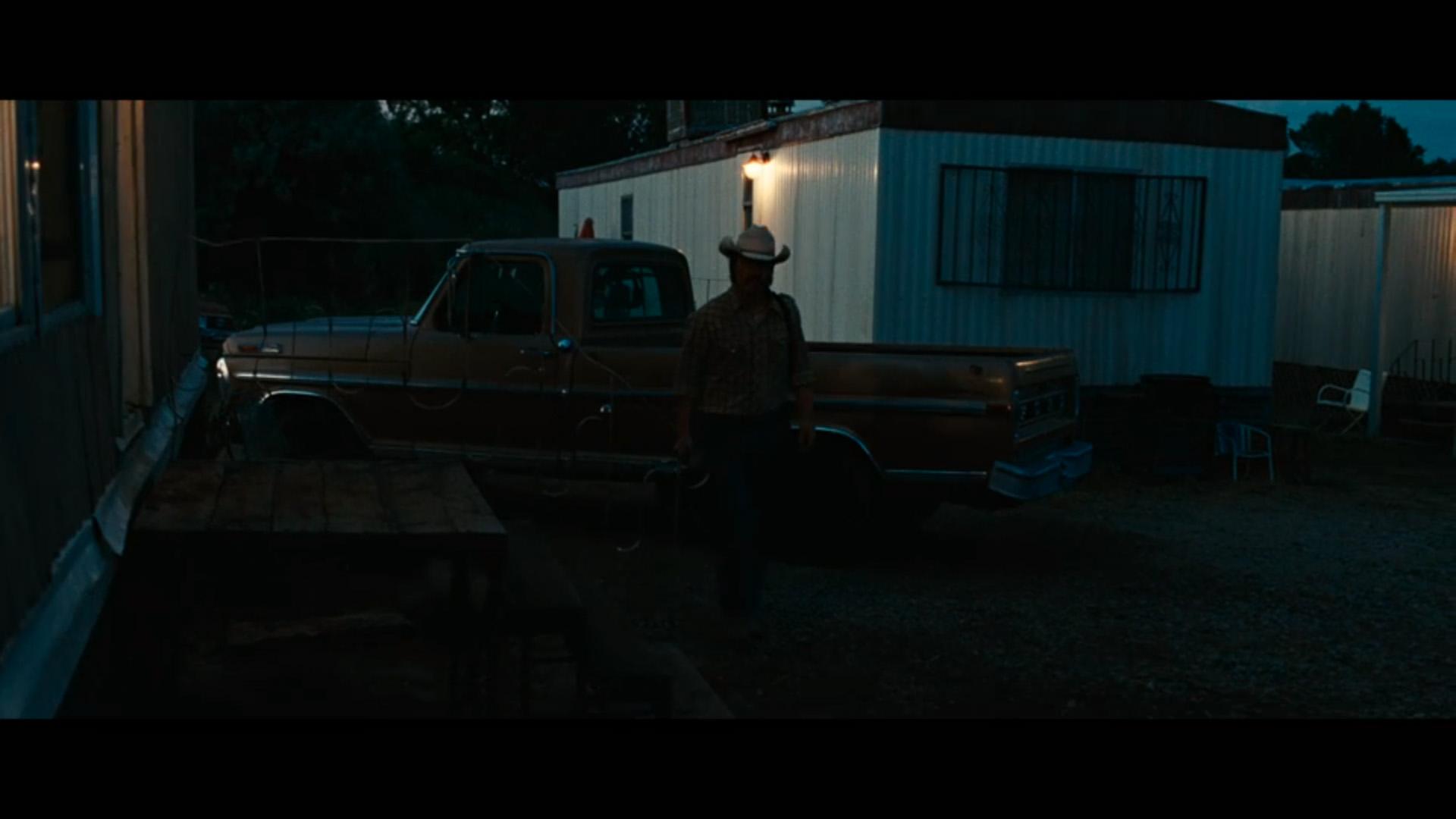
Anyway, in a couple of weeks i’ll be shooting my first short movie and i’ve to trust my instinct about finding “the right” photography for it. And I feel i’m going to jump full speed in a disaster, ah ah. The new Ed Wood could be among you, be aware!For example in this shot where would be the right point to read the light meter? I suppose the goal of the shot was to preserve the details in the shadows to make the actor still visible without overexposing everything else, so my guessing is that i should read it by the actor and dim the light in the background in a way that what is under the key light is not completely overexposed…is it correct (or at least not too far from the solution, ah ah!)
About this subject, i’ve got a question about the exposure of multiple subjects under different lights, as David was describing in his post.
I’m planning a low key full shot in a quite dark room, with just a couple of practical lights (in theory, managing to actually shot it it’s another story, ah ah). I’ve read that distance from the camera doesn’t affect exposure, so if i understood correctly the reading i’d obtain if i’d use a lightmeter near the actor should allow me to expose him correctly even from some distance.
But in such a situation I should expose for the subject under the practical light (perhaps underexposing the shadows) or aiming for the right look for the shadows but overexposing the actor?
Sorry if it’s a quite stupid question and if there are errors in my reasoning but i’m trying to learn!I know the comics and illustration world and this is happening yet: people are losing jobs because of this abomination of AI, besides the huge copyright problem of the softwares (their “training” database are full of copyrighted images used without permission). Surely it will impact the cinema world too, but i see a big difference : while it’s almost virtual impossible to say if an image is AI created or not (or, better, you can say that, but it’s getting better every day and soon it will be impossible), it’s impossible to claim to have shot a movie if all the actors and crew are…not existing. I think that AI will be used for commercials and maybe for some vfx shots. Maybe for low budget production and short movies.
But my very humble opinion is this one : i’m making my very first steps in cinematography and i’m trying to learn something new every day. It’s difficult, complicated, hard and so on, but it’s the right way to learn. If an AI could create for me my short movie in a couple of minute i would not use it as well. It would take the creative pleasure away , for me.
Thanks to you all for your answers!
I know that for some recording profile (s-logs for example) they suggest to overexpose a bit, and perhaps the idea expressed by the teacher was something in that line. But i’ve had the impression that he was meaning a general approach more than a requirement of some types of files, so i was curious about how diffuse is that idea among professional DOP and from your answers my guess was correct: if you want a scene to look in some way, commit to the idea and manage to shot it in that way (and this may not be easy if the budget and the experience are limited, but this is a completely different problem).Thanks for your advices! you helped me a lot in understanding what kind of effect i’m actually looking for!
Sorry for the late of my reply, i’ve been trying for days to submit a (way more articulate) post about my project but every time it blocks: it seems the forum hates my idea, ah ah! but at least i’d like to thank you!
Edit: i meant, as a possible solution, to use a 1/2 mist filter just for the torch shot, not the 1/8 I wrote (i’m using the 1/4 for the rest of the short movie, so a 1/8 would be senseless in this scenario, since i need a stronger effect, not weaker) . Sorry but i can’t edit the post!
January 21, 2024 at 4:51 am in reply to: Lighting Approach for Daytime Interior in a High Rise #215483In such a scenario how would you deal with heavily changing weather conditions (in the case in which waiting for the right moment is not an available option). Let’s say, he has a clear sky the first day, a cloudy sky the second day and an heavy rain the third day?
We made no reference to the first Blade Runner as far as the look is concerned.
It’s a nice thing to know, I think that the sequel, while different and new, has the same soul of the first BR and maybe this made me found visual connections too.
I love so much the original movie that when I read that a sequel was in production I was a bit worried: you know, fans are a bit silly sometimes, when a beloved title gets a sequel/prequel/remake/reboot/whatever 🙂 but when I watched the movie I found it amazing, you created an extraordinary piece of art.
Thanks for sharing the behind the scenes of this movie (and all the other ones) on your site!In BR2049 I wanted the interior of the Wallace Corporation to look as if it were sun lit.
One of the aspects I loved about BR2049 is that somehow it makes visual references to the original BR, for example the warm lights of Wallace Corporation made me think to the similar lights of Tyrrell Corporation. Did you consider this aspect while planning the lighting of the movie?
Since they are defects of the lens (even if vignetting could be a – questionable – artistic choice) my humble opinion Is that the important Is to get rid of them, with a Lens that reduces the effects, a camera able to correct them or in post production, whatever your budget allows . The real question Is why sometimes they feels the need to add defects to a flawless image (vignetting, flares, ecc) but that’s another story. 🙂
May i ask a about the aperture and equivalence? I’ve read many confusing position about that. For some It seems that aperture changes to consider the equivalent focal length, for others the sensor doesn’t influence the aperture because It’s a ratio based on actual lens size . Who’s right?
Only Roger knows what he was thinking about, of course, but for example the Alexa Mini LF (the one from 1917) is full frame (I’m not an expert, i’ve just looked for It and i may be wrong).
Anyway, I was watching the very same video the other day! 🙂 I suppose you listened to the podcast episode about lensens (the video Is taken from that i think) and what i learned is that it’s pointless (for me) to know what gear he uses, it’s the way of thinking that i can try (just try) to use. Wide lenses to put an important character in context, longer lenses for less important characters, prime lenses to be forced to take decisions and somehow to create “intimacy” with the actors and make the audience feeling to “be in the scene”, not “watching a movie”, etc. In this way is not that relevant, i think, the size of the sensor and the equivalence.
I’m the person with less experience here but I could suggest you something that Is helping me in understanding the behaviour of light and Its connection with exposure. If you have a smartphone you can download a free exposure meter app. They use the phone light sensor and the one i use Is completely free. I’m of course aware that these can’t sobstitute a true exposure meter (but they are expensive) and experience above all (and that comes by trials and errors and time), but I’m beginning to be aware of differences in lights strength and i’m beginning to be able to set the lights accordingly to the exposure i want. I check the result with the camera metering to see of It indicates the 0. Again, i am aware of the limited valute of my advice but it’s working for me and, well, It’s free after all… 🙂
Summing up, since I don’t have a 6k li camera I’ll try not to use the post production stabilization to avoid the cropping from 4k .
Just to be clear, you don’t need post stabilizer with a gimbal, it just makes things ultra smooth instead of smooth. The frugal tripod stabilizer hack will help reduce shake but especially micro jitter, which is the bigger evil anyways imo.
Thanks!
You all have helped me a lot with this issue.
I think I’m making some progresses, it seems I found my personal way to use the tripod (more like a shoulder rig than a gimbal) and I’m beginning to understand the Groucho walk that Roger suggested. Next step is going on location and do some test, I really want this scene to work and I’d like to solve all the problems in pre production…
-
AuthorReplies
