Calculating exposure of practical overhead, dinner table

Posted on by

Home Forums Lighting Calculating exposure of practical overhead, dinner table

  • Creator
    Topic
  • #235800
    lildarkroom
    Participant

      Hi Roger!

      Rewatched The Reader recently (quickly have to say how much I admire the craft of blocking from you and Stephen in this movie), and I got curious about the dinner scene where you’re keying with an overhead practical and using the table as bounce to fill the actors’ faces, all while keeping spill off the walls.

      I know there are many ways to approach a dinner table scene, but in this case I love the simplicity of the setup.

      My question is about how you determine the right amount of light from the practical. Are you always working out bulb count, wattage, diffusion around the bulbs, dimming, using inverse square law to predict falloff? Or is it partly instinct built up over decades of knowing what this type of fixture will do in a given space?

      My fear approaching something like this myself would be bouncing too much light into the ceiling and flattening out the room. So maybe this was a set with no ceiling, or black duvetyne rigged above?

      Thanks for any insight!
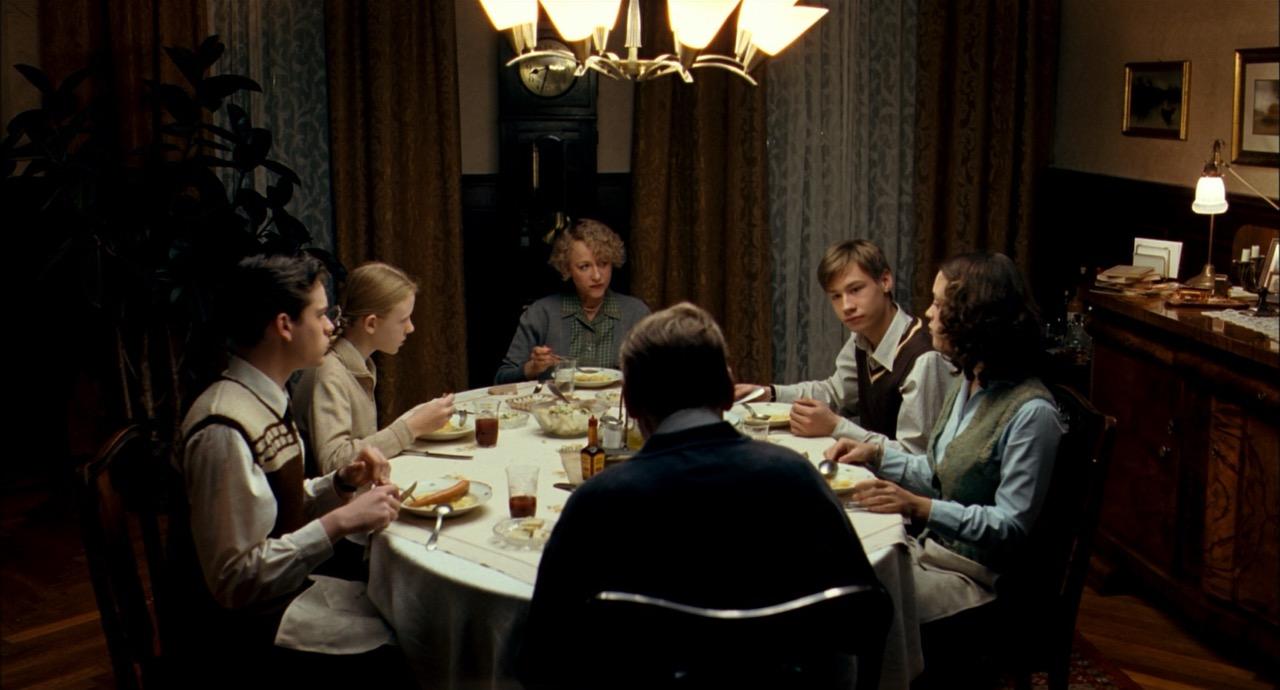
      The Reader Still

    Viewing 3 replies - 1 through 3 (of 3 total)
    • Author
      Replies
    • #236981
      benjaminsavoy
      Participant

        Rewatched The Reader recently (quickly have to say how much I admire the craft of blocking from you and Stephen in this movie), and I got curious about the dinner scene where you’re keying with an overhead practical and using the table as bounce to fill the actors’ faces, all while keeping spill off the walls. geometry dash 3d

        I know there are many ways to approach a dinner table scene, but in this case I love the simplicity of the setup.

        My question is about how you determine the right amount of light from the practical. Are you always working out bulb count, wattage, diffusion around the bulbs, dimming, using inverse square law to predict falloff? Or is it partly instinct built up over decades of knowing what this type of fixture will do in a given space?

        My fear approaching something like this myself would be bouncing too much light into the ceiling and flattening out the room. So maybe this was a set with no ceiling, or black duvetyne rigged above?

        Thanks for any insight!

        It’s usually a combination of planning and experience. You start with the exposure you want on the actors’ faces, then adjust bulb output, diffusion, fixture height, and dimming to get there. The table often acts as a controlled bounce source, while black solids, duvetyne, skirts, or negative fill are used to keep light off the walls and ceiling. After years of shooting, much of this becomes instinct—you generally know how a practical will behave in a given space and then fine-tune by eye.

        #237016
        Roger Deakins
        Keymaster

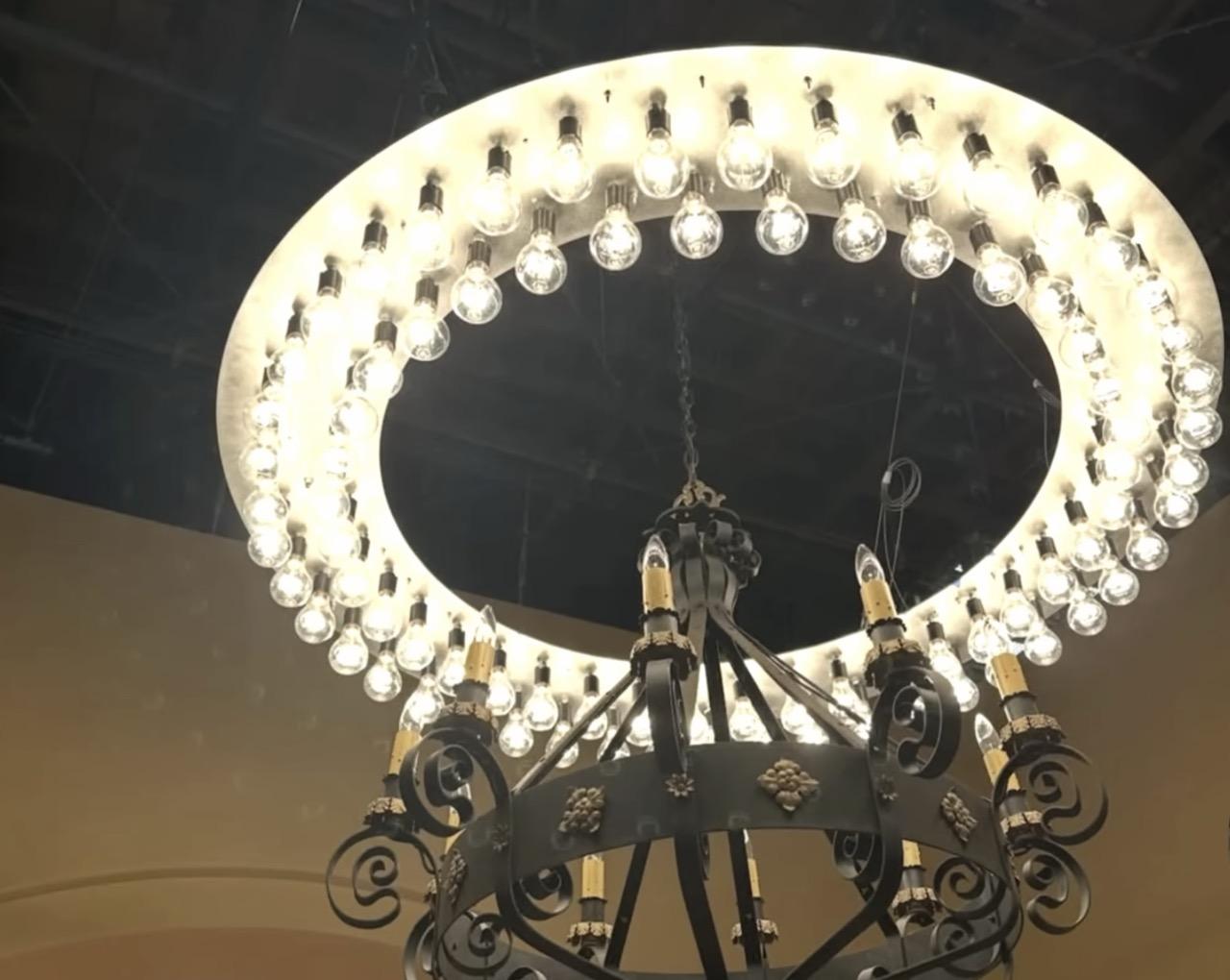
          Frankly, I can’t remember if I shot this scene or Chris did. I think (and what I would have done in this kind of situation) I used a ring of household bulbs above the chanedlier and close to the ceiling. The ring, probably 3′ in diameter, would have been skirted with silver foil, simple aluminum cooking foil, to keep the light from filling the room. So, while the practical source was doing much of the work the additional bulbs were softening the overall effect and adding to the exposure while not blating light everywhere as a bounce might.

          #237018
          lildarkroom
          Participant

            So the idea is maybe something like this with a skirt? Is there ever a worry of casting a shadow of the chandelier on the table/actors when lighting from above or are household bulbs generally soft enough to avoid that issue?


            bulbs

          Viewing 3 replies - 1 through 3 (of 3 total)
          • You must be logged in to reply to this topic.