Safety protocol for using high-wattage bare bulbs in studio settings

Posted on by

Home Forums Lighting Safety protocol for using high-wattage bare bulbs in studio settings

  • Creator
    Topic
  • #220739
    stefanosteno
    Participant

      Hello Roger and James,

      I am working on a project in which I need to recreate a moving shaft of light similar to the one in the Replicant Stairway sequence.

      In your lighting notes, you mention using 24K tungsten bulbs mounted on a pipe rig. I would be working with much lower-power lamps (5K or 10K), and I’m trying to understand the correct and safe way to work with this type of setup: what type of protection should be in place to prevent hazards in case of bulb failure?

      Thank you very much for your time and for the extraordinary amount of knowledge you share on this forum.

      All the best,
      Stefano

    Viewing 4 replies - 1 through 4 (of 4 total)
    • Author
      Replies
    • #220780
      siva-r
      Participant

        Sir,

        I am preparing a night shoot at G. M. C. Balayogi Athletic Stadium, Hyderabad, an indoor stadium with a full-size athletic field (105m × 68m).
        The scene is set during the Asian Games, featuring a 400-meter running event. The stadium is fully established with a large cheering crowd, and spectators are waving multiple country flags — India, Sri Lanka, Pakistan, and others. The actors run continuously across long distances.

        I would like to understand your approach to lighting a sequence of this scale and energy.

        When lighting an indoor stadium for a night Asian Games event, how do you decide between relying on existing stadium lighting and introducing a controlled cinematic lighting design?
        For a 400-meter race with sustained running action, how do you maintain consistent exposure and contrast across the track without the lighting becoming flat or repetitive?
        With a large, cheering crowd and moving flags, how do you approach lighting the background so it feels alive and energetic without overpowering the athletes?
        Do you prefer lighting the entire stadium evenly for realism, or shaping light in specific zones and allowing athletes to move through varying light levels? What influences that choice?
        At this scale, how do you manage light direction and shadow when runners move toward and away from camera, while preserving depth and separation?
        What types of light sources would you typically rely on for such an indoor stadium event — overhead rigging, large HMIs, or motivated practical stadium lights?
        How do you balance realism and cinematic drama in a night sports event without losing texture in faces, track surface, grass, and crowd details?
        From a storytelling perspective, what visual elements become most important in a sequence like this — national identity, scale, tension, or emotional momentum — and how does lighting support that?

        Thank you, sir. Your work continues to be a masterclass in handling scale, movement, and emotion through light.

        #220822
        Roger Deakins
        Keymaster

          To comment on the first post from Stefano. Protection from a bare bulb is tricky. You can cover the bulb with a wire mesh but that will interfere a little with the sharpness of the emitted light. That was a compromise we used for whenever an actor was below or close to a source. However, for the one corridor shot with the vertical slashes of light we felt there was no need for protection as the bulbs were a ways away from an actor.

          As far as lighting a stadium for a 400 meter track race, I couldn’t say. Presumably, the existing location has built in lighting. Whether I would use it or not would depend on many factors: the script, the shots required, budget, the length of the shoot, whether slow motion is involved. I’m sure there are a few more. However, I would suggest that it is most common to augment existing light sources rather than start from scratch. I did light one stadium for a night shoot and I just was not allowed enough units to do justice to the scene – regardless that I had three 96K Musco lights!

          #220866
          nathanielregier
          Participant

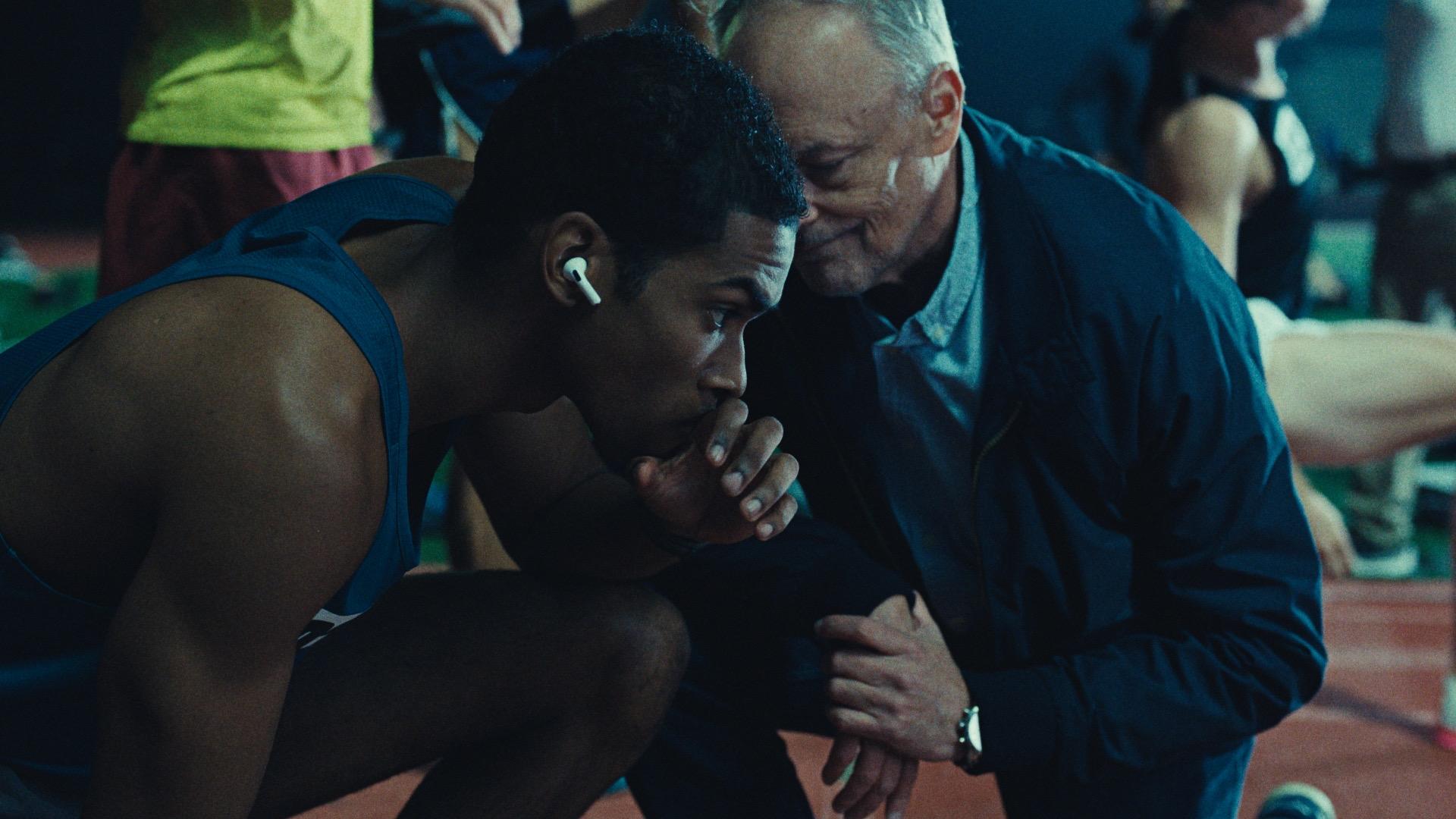
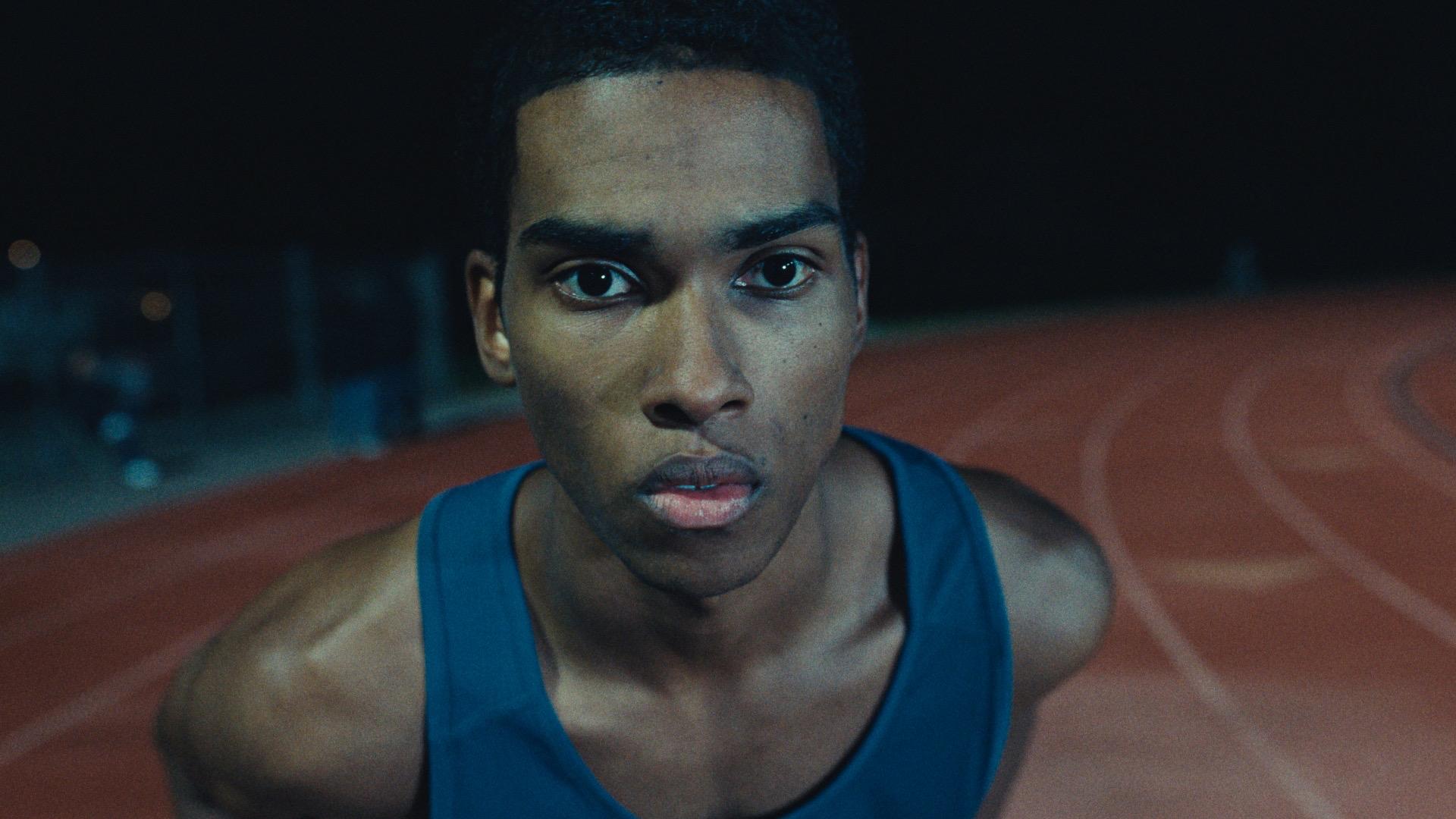
            Hi Stephano, I’m happy to chime in here, since I recently went through a very similar shoot to what it seems like you are about to do. I recently just shot a film with a complex sequence that takes place at a track event over 1500m of running distance. Of course my first question was, how am I going to light this? With a very limited budget I decided to rely on a stadium’s existing lighting during running sequences, seeing that augmenting any amount of light over a large distance like that would create an enormous amount of work and equipment, the kind of work definitely not in our budget.

            Instead I asked production to find a location where I would have some control over the stadium lights, at least the ability to shut off one side or the other. They found a track with LEDs that could actually dim on either side of the stadium and with a low, medium and high setting. Great!

            I did augment some static scenes before and after the race with small units. At one point on the starting line I started bringing in 12×12’s and extra lights to help shape things but quickly realized that keeping continuity across the film was going to be very hard if I continued with this method. Instead, after one take, I decided to strip everything back and keep things much more honest to what the location was giving. I only added one Vortex for backlight to give a bit more edge (see above).

            When it came to the shooting the running sequences, we were so strapped with time coordinating the action of the running, dramatic beats, and timing the camera car that lighting became the last thing I wanted to think about. As a result we ended up leaving the lights as they were, at full blast for most action sequences. I think it was a good lesson in learning to not have to make everything “pretty”, and just embracing what the location was giving us. It felt more true to the story and in the end it shouldn’t distract from anything on screen.

            Hopefully this long anecdote can give you some more context on shaping your decisions for your film!

            #220925
            drewvalenti
            Participant

              Hey Stefano, it sounds like the core of your question is “what type of protection should be in place to prevent hazards in case of bulb failure.” I encourage you to discuss this with your gaffer and key grip. When it comes to electrical hazards and rigging safety, it’s not the DP who will be physically close to the dangers. If you don’t feel you have a gaffer or key grip you can rely on and fully trust, that’s a red flag. Find crew you can trust, crew with more experience in their role than you have in their role. Utilize their experience and perspective. Instead of dictating a master plan, collaborate with them – if they’re experienced, they can save you time, money, and get you closer to your visual goals with less headache.

              Hope this helps!

              Drew
              Gaffer, Los Angeles

            Viewing 4 replies - 1 through 4 (of 4 total)
            • You must be logged in to reply to this topic.